
Finding the right people to contact can make a big difference in B2B marketing. Companies that sell software, equipment, professional services, staffing solutions, technology, or other business products often need to connect with clinics and the people responsible for running them. The challenge is that finding suitable contacts through manual research can take a lot of time.
A clinics email database can give businesses a more organized starting point for identifying clinic professionals. Instead of spending hours searching through different sources, sales and marketing teams can work with structured contact information and focus more attention on building relevant business relationships.
What Is a Clinics Email List?
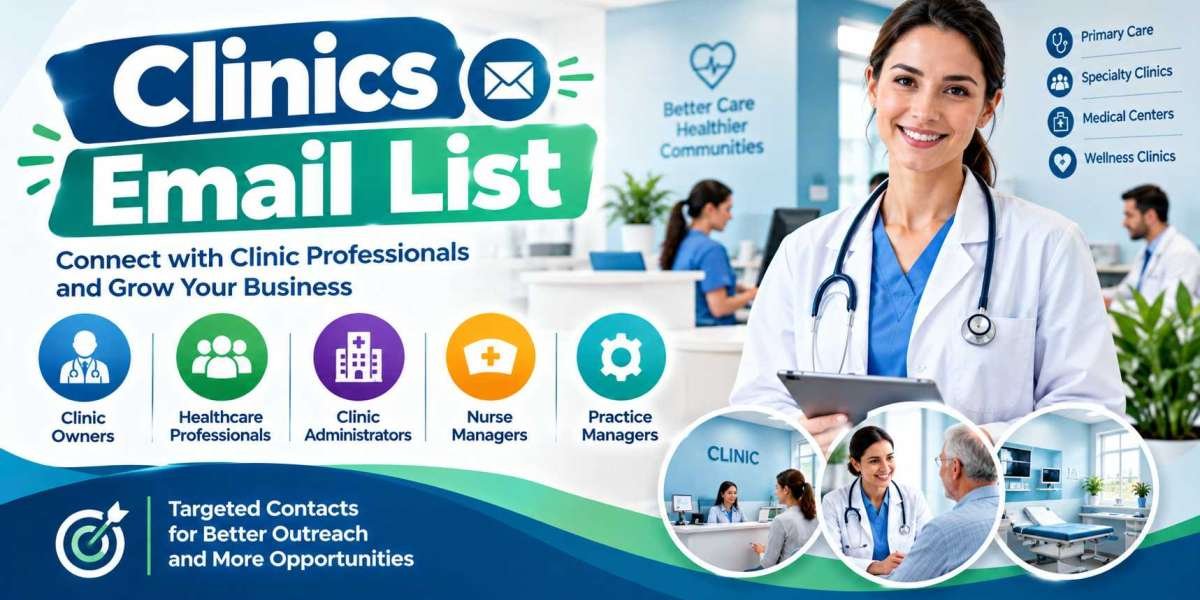
A Clinics Email List is a collection of business contact information related to clinics and their professional teams. Depending on how the database is organized, it may include clinic owners, practice managers, administrators, directors, office managers, operations professionals, and other business decision-makers.
The value of an organized list comes from its ability to make prospecting more focused. Rather than sending a general message to a large and unrelated audience, businesses can identify contacts who are more closely connected to their target market.
For example, a company offering appointment management software may want to speak with practice managers, while a supplier of clinic equipment may prefer to reach purchasing professionals or clinic owners. Knowing who to contact can make the outreach process much more efficient.
Why Clinics Are an Important B2B Audience
Clinics come in many different forms. Some are small independent practices, while others are specialty clinics, larger organizations, or businesses operating across several locations. Their needs can vary depending on their size, services, staff, and operational structure.
Businesses may approach clinics with a wide range of solutions, including:
- Practice management software
- Office and administrative services
- Medical equipment and supplies
- IT and cybersecurity solutions
- Marketing services
- Recruitment and staffing
- Accounting and financial services
- Facility management
- Business consulting
- Scheduling and communication platforms
This variety makes clinics an interesting audience for companies that provide B2B products and services.
Reach the Right Decision-Makers
One of the biggest challenges in business outreach is identifying the person who can actually evaluate or influence a purchasing decision. Contacting the wrong person can result in little response, even when the product itself is useful.
A more targeted approach can focus on professionals whose responsibilities match the solution being offered. Depending on the campaign, this could include clinic owners, practice managers, administrators, operations managers, directors, or purchasing professionals.
For instance, an operations manager may be interested in improving internal processes, while a clinic owner may be more focused on business growth, expenses, and overall performance. Understanding these differences allows businesses to create messages that are more relevant to each audience.
Make B2B Prospecting More Efficient
Prospecting can consume a significant amount of time. Sales representatives may have to search websites, business directories, professional pages, and other sources before they can even begin contacting potential prospects.
An organized Clinics Email List can provide a useful starting point for this process. Instead of beginning every search from scratch, sales teams can work from a structured group of potential contacts and then research the organizations that appear most relevant.
This does not mean that additional research is unnecessary. Businesses should still learn about their prospects before starting a conversation. However, having organized contact information can make the initial stage of prospecting easier to manage.
Create More Relevant Outreach
Not every clinic has the same challenges. One organization may be looking for better scheduling tools, while another may need help with marketing, staffing, technology, or administrative operations.
For this reason, sending one identical message to every contact is rarely the best approach. Businesses can divide their audience into smaller groups based on job title, clinic type, location, specialty, or business needs.
A software provider, for example, could create one campaign for practice managers and another for clinic owners. The first campaign could focus on saving staff time and improving daily workflows, while the second could highlight efficiency and business growth.
Simple changes like these can make an outreach campaign feel more relevant and less generic.
Support Different Marketing Strategies
A Clinics Email List does not have to be used for only one type of campaign. It can support different parts of a broader B2B marketing strategy.
Sales teams can use contact information to identify potential accounts and prepare for conversations. Marketing teams can segment prospects and develop campaigns for specific groups. Businesses can also use the information as part of account-based marketing efforts, where selected organizations receive more focused attention.
The key is to use the contact information as part of a larger strategy rather than treating the list itself as the entire marketing solution.
Save Valuable Time
Time is particularly important for small sales and marketing teams. When employees spend too much of their working day searching for basic prospect information, they have less time for follow-ups, sales conversations, relationship building, and campaign planning.
A structured database can reduce some of the manual work involved in finding potential contacts. Teams can use it as a starting point, identify the most relevant prospects, and then spend more time understanding their businesses.
This can create a more balanced workflow between research and actual outreach.
Keep Clinic Contacts Organized
Organization becomes increasingly important as a prospect database grows. When contact information is stored across different spreadsheets, notes, websites, and platforms, managing campaigns can become difficult.
Businesses can organize clinic contacts using information such as:
- Job title
- Clinic type
- Location
- Company size
- Professional specialty
- Business role
- Target market
This type of organization can make it easier to create smaller prospect groups and develop campaigns around specific audiences.
Pay Attention to Data Quality
Having a large number of contacts is not enough to create a successful campaign. The quality and relevance of the information are equally important.
Email addresses, job titles, company details, and other contact information can change over time. Using outdated information may lead to bounced emails, wasted resources, and less effective campaigns.
Businesses should review and validate their contact data before using it. Keeping information updated can help sales teams work with a more reliable prospecting resource.
It is also important to follow applicable email marketing laws and regulations. Businesses should communicate responsibly, respect recipient preferences, and use contact information in accordance with relevant requirements.
Combine Contact Data with Personalization
Good prospecting is about more than having someone's email address. The real opportunity comes from using available information to start a useful conversation.
Personalized outreach can be as simple as referring to the recipient's professional role, clinic type, or a relevant business challenge. The goal is to explain why the message may be useful to that particular person.
A short and relevant email can often be more effective than a lengthy message filled with general promotional information. When recipients can quickly understand the purpose of the communication, they have a clearer reason to respond.
Track Campaign Results
Every outreach campaign provides useful information about what is working and what needs improvement. Businesses can monitor metrics such as delivery rates, responses, meetings, conversions, and overall engagement.
These results can help marketers identify which segments are responding best. If practice managers are more responsive to a particular type of message, future campaigns can place greater focus on that audience.
Testing different subject lines, messages, audience segments, and follow-up approaches can also help businesses improve their results over time.
A Practical Approach to Clinic Outreach
A Clinics Email List should be considered a tool that supports prospecting, not a replacement for genuine relationship building. Successful outreach still depends on understanding the audience and offering something relevant.
Businesses can begin by defining the type of clinics they want to reach. From there, they can identify suitable professional roles, organize contacts into relevant segments, research individual prospects, and create messages around their likely needs.
Following up appropriately is also important. Some prospects may not respond to the first message, while others may need additional information before deciding whether to continue the conversation. A thoughtful and professional approach can help businesses build stronger relationships over time.
Conclusion
Reaching clinic professionals can be valuable for businesses that provide products and services to this market. However, finding suitable contacts and organizing prospect information can become a time-consuming part of the sales process.
A Clinics Email List can provide a practical starting point for identifying relevant professionals and organizing B2B outreach. When combined with good data practices, audience segmentation, personalization, research, and responsible communication, it can help businesses approach their prospects in a more focused way.
The goal is not simply to contact more people. It is to reach the right clinic professionals with a relevant message at the right time. By taking this approach, businesses can make their prospecting efforts more organized and create better opportunities for meaningful B2B conversations.