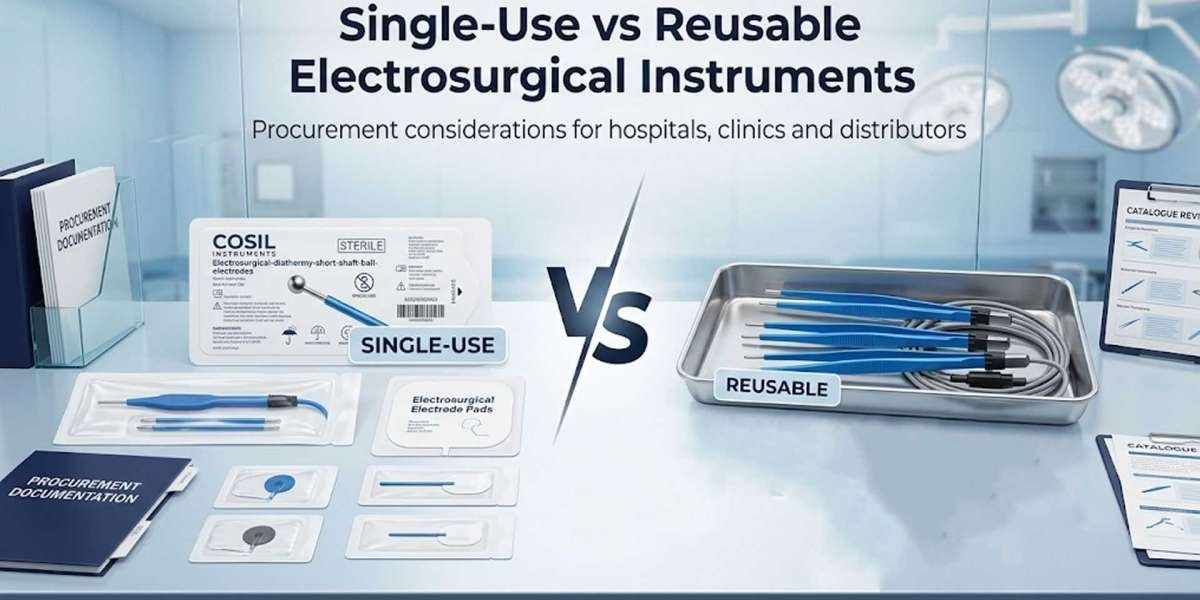

A practical guide for hospitals, clinics and distributors comparing purchasing models for electrosurgical instruments, forceps and surgical accessories
Choosing between single-use vs reusable electrosurgical instruments is not a simple price comparison. Hospitals, private clinics, surgical departments and medical distributors need to consider clinical workflow, stock management, documentation requirements, handling processes, internal policies and repeat purchasing expectations before selecting the right sourcing route.
Single-use vs reusable electrosurgical instruments should be reviewed through a structured procurement process, not only by unit cost. Buyers should consider product category, handling requirements, internal review procedures, documentation needs, stock planning and whether the product is being sourced for direct use, distributor supply or procedure pack planning.
Why the Decision Matters in Surgical Procurement
Electrosurgical procurement often involves connected product groups such as electrosurgical forceps, bipolar forceps, diathermy electrodes, cautery pencils, electrode pads, cables, plugs and procedure packs. When buyers compare single-use and reusable options, the decision can affect more than the product itself. It may also influence stock handling, purchasing frequency, storage planning, internal documentation review and supplier communication.
For healthcare buyers and distributors reviewing connected surgical product categories, suppliers such as Cosil Instruments’ electrosurgical instruments range can support product-led sourcing conversations across forceps, bipolar instruments, diathermy accessories, procedure packs and related surgical supplies.
Procurement insight: Buyers should compare single-use and reusable products by workflow suitability, documentation requirements, handling expectations, purchasing model and repeat supply needs rather than treating the decision as a simple cost exercise.
Single-Use Electrosurgical Instruments: Key Buying Considerations
Single-use electrosurgical instruments may be considered when healthcare buyers require defined usage models, simplified stock handling or specific product configurations. They can also be relevant for distributors responding to customers who prefer clear usage expectations and repeat purchasing patterns.
- Stock planning: Buyers should consider expected usage volume and reorder frequency.
- Packaging expectations: Product packaging should be reviewed early during procurement discussions.
- Documentation needs: Procurement teams may require product details, catalogue information and quality-related documentation.
- Distributor suitability: Distributors should assess customer demand, repeat order potential and product presentation requirements.
- Procedure pack planning: Single-use items may be discussed as part of a defined surgical kit configuration where appropriate.
Reusable Electrosurgical Instruments: Key Buying Considerations
Reusable electrosurgical instruments may be reviewed when buyers have established handling processes, internal reprocessing arrangements and long-term product planning. Procurement teams should assess whether reusable products fit the organisation’s operational workflow before making a purchasing decision.
- Handling process: Buyers should confirm internal handling and reprocessing requirements before ordering.
- Lifecycle planning: Reusable products may involve longer-term purchasing considerations.
- Internal review: Clinical, technical, procurement and compliance stakeholders may need to review product suitability.
- Accessory requirements: Related cables, plugs, electrodes or procedure pack components may need to be considered.
- Supplier communication: Buyers should request product details and documentation early.
Where Forceps Fit into the Comparison
Electrosurgical forceps and bipolar forceps are often central to the single-use versus reusable discussion. Buyers should confirm the exact product type, insulation expectations, connection requirements, packaging preferences and documentation needs before requesting a quotation.
Electrosurgical Forceps
Electrosurgical forceps should be reviewed with attention to instrument type, handling expectations, sizing, product details and internal purchasing requirements. The supplier should be able to provide clear information that supports clinical and procurement review.
Bipolar Forceps
Bipolar forceps may require a more detailed sourcing conversation, especially when buyers are comparing standard bipolar forceps, single-use bipolar forceps with integrated cable or specialist bipolar options. Connection details, packaging expectations and documentation requirements should be discussed early.
Supplier-side perspective: The most useful enquiries include the forceps type, single-use or reusable preference where known, expected quantity, destination market, documentation needs and any related accessory requirements.
Diathermy Accessories and Related Sourcing Needs
The decision between single-use and reusable products may also connect with broader electrosurgical accessory sourcing. Buyers may need diathermy electrodes, cautery pencils, electrode pads, cables, plugs or procedure pack components in the same purchasing cycle.
- Diathermy electrodes should be reviewed by type, quantity, packaging needs and documentation requirements.
- Diathermy cautery pencils may be sourced alongside electrodes or forceps.
- Electrode pads should be discussed with clear product details and procurement expectations.
- Cables and plugs should be reviewed early when connection-related requirements are involved.
How Procedure Packs Influence the Decision
Procedure packs can change the way buyers think about single-use and reusable products. When a hospital, clinic or distributor needs a defined surgical kit, the pack contents should be planned carefully. Buyers should confirm which components belong in the pack, how many units are required, packaging expectations, order volume and documentation needs.
For buyers planning custom surgical kits, procedure packs can support a more structured sourcing conversation when the required components and quantities are clearly defined.
Questions Buyers Should Ask Before Choosing
- What product category is being sourced?
- Is the product required as a single item or part of a procedure pack?
- What quantity is expected for the first order and repeat purchasing?
- What documentation is required for internal review?
- Are related accessories needed in the same purchasing cycle?
- Does the product need to support distributor resale or direct clinical procurement?
- Have clinical, technical, procurement and compliance stakeholders reviewed suitability?
FAQs About Single-Use vs Reusable Electrosurgical Instruments
Should buyers choose single-use or reusable electrosurgical instruments?
The right choice depends on internal workflow, handling process, procurement policy, stock planning, documentation needs and product suitability. Buyers should confirm suitability through their own review process before selecting either option.
Are single-use electrosurgical instruments better for distributors?
Not always. Distributors should assess customer demand, documentation needs, product category, repeat order potential and customer purchasing preferences before deciding which products to source.
Can reusable instruments be included in procedure pack planning?
Procedure pack contents depend on the buyer’s defined requirements. Buyers should confirm product suitability, pack configuration, quantities and documentation needs before requesting a quotation.
What information should suppliers receive before quoting?
Suppliers should receive the product category, expected quantity, single-use or reusable preference where known, destination market, packaging expectations, documentation needs and related accessory requirements.
Final Thoughts
The strongest procurement decisions are made when buyers compare single-use and reusable electrosurgical instruments through a practical sourcing lens. Product category, documentation, handling expectations, accessory requirements and repeat purchasing needs all matter. By preparing clear enquiries and working with suppliers that understand connected surgical categories, healthcare buyers and distributors can make the sourcing process more efficient and reliable.
Review product category, documentation, packaging, workflow and repeat purchasing needs before choosing single-use or reusable electrosurgical instruments.