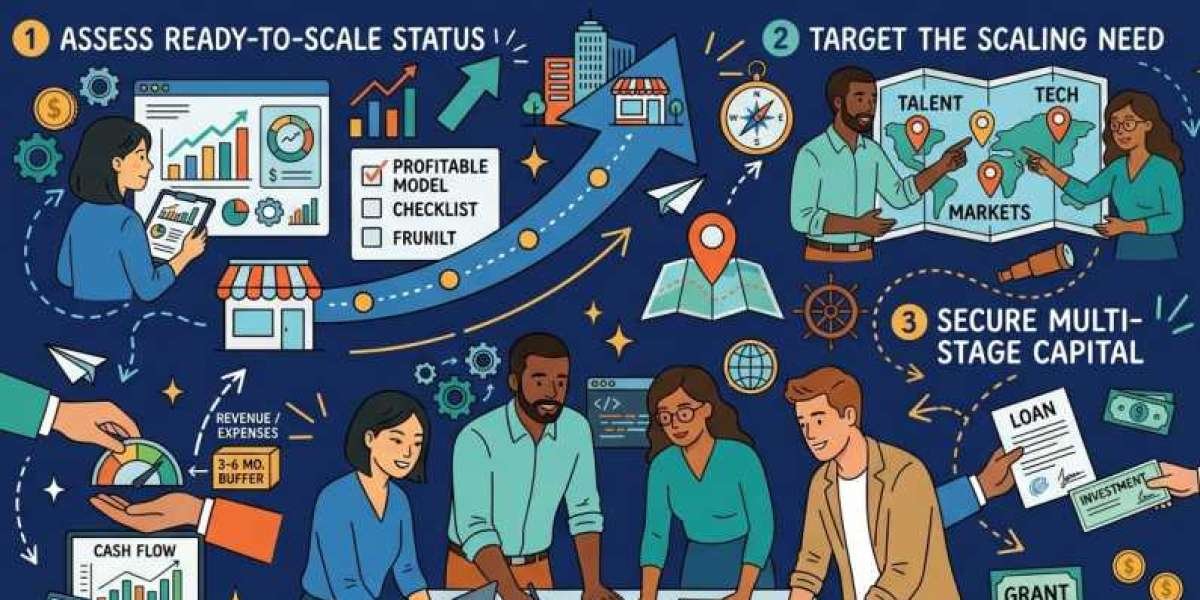

Scaling a small business is rarely just about having a great product or service — it's about having the financial structure to support growth without losing control of operations. This is where growth navigate business funding becomes a valuable tool. It gives small business owners a strategic way to access and manage capital so that scaling happens in a stable, sustainable manner, rather than through reactive borrowing or financial guesswork.
Used effectively, growth navigate business funding helps small businesses move from surviving to thriving, by ensuring every stage of expansion is backed by the right type and amount of capital.
Understanding the Role of Funding in Scaling
Scaling a business means increasing output, revenue, or market presence without a proportional increase in costs. But in the early stages of scaling, most small businesses actually need more capital before they see returns — whether that's for hiring, inventory, marketing, or new equipment.
Growth navigate business funding helps bridge this gap. Instead of treating funding as a one-time event, it treats it as an ongoing strategy that evolves alongside the business's growth stage.
Step 1: Identify the Scaling Bottleneck
Before pursuing funding, small businesses need to identify what's actually limiting their growth. Common bottlenecks include:
- Insufficient inventory or production capacity
- Lack of staff to handle increased demand
- Limited marketing budget to reach new customers
- Outdated technology or equipment slowing operations
Growth navigate business funding starts with pinpointing these specific constraints, since the type of funding needed often depends on which bottleneck is being addressed.
Step 2: Choose Funding That Matches the Scaling Need
Not all funding sources are created equal, and matching the right one to the right need is central to scaling effectively. For example:
- Inventory or production scaling often works well with revenue-based financing, since repayments adjust with sales volume.
- Hiring and staffing needs may be better supported by a flexible business line of credit.
- Marketing and customer acquisition can sometimes be funded through short-term loans tied to expected revenue growth.
- Equipment or technology upgrades are often suited to equipment financing or traditional term loans.
By aligning funding type with specific scaling needs, small businesses avoid taking on debt or investment that doesn't actually solve their growth problem.
Step 3: Use a Phased Funding Approach
One of the most effective ways small businesses use growth navigate business funding is by breaking funding into phases tied to measurable milestones, rather than seeking one large sum upfront. For example, a business might secure a smaller round of funding to test a new product line, then pursue additional funding once early results show demand.
This phased approach reduces financial risk, keeps repayment obligations manageable, and allows the business to adjust its strategy based on real performance data rather than assumptions.
Step 4: Protect Cash Flow While Scaling
Scaling too quickly without attention to cash flow is one of the most common reasons small businesses struggle, even when demand is growing. Growth navigate business funding emphasizes aligning repayment schedules with actual cash flow patterns, rather than committing to fixed payments that could strain the business during slower periods.
This might mean choosing financing options with flexible or revenue-based repayment terms, especially for businesses with seasonal fluctuations or inconsistent monthly income.
Step 5: Diversify Funding Sources When Appropriate
Relying on a single funding source can limit flexibility. Many small businesses that scale effectively use a mix of funding types — such as combining a business line of credit for short-term flexibility with a term loan for larger, planned investments. This diversified approach, guided by a growth navigate business funding strategy, helps businesses avoid overexposure to any single lender or repayment structure.
Step 6: Reassess Funding Needs as the Business Grows
Scaling isn't a one-time event, and neither is funding. As a small business grows, its needs shift — what worked to fund an initial product launch may not be sufficient for entering a new market or scaling operations nationally. Successful use of growth navigate business funding involves regularly reassessing financial needs and adjusting the funding strategy accordingly.
Why This Approach Works
The core advantage of using a growth navigate business funding approach is that it turns funding into a strategic tool rather than a reactive fix. Small businesses that plan their funding around specific scaling needs — rather than borrowing broadly or opportunistically — tend to grow more sustainably, with fewer cash flow surprises and more control over their financial future.
Final Thoughts
Scaling effectively requires more than ambition; it requires a clear financial strategy that evolves with the business. By identifying scaling bottlenecks, matching funding types to specific needs, using a phased approach, and protecting cash flow along the way, small businesses can use growth navigate business funding not just to survive expansion, but to grow with confidence and stability.