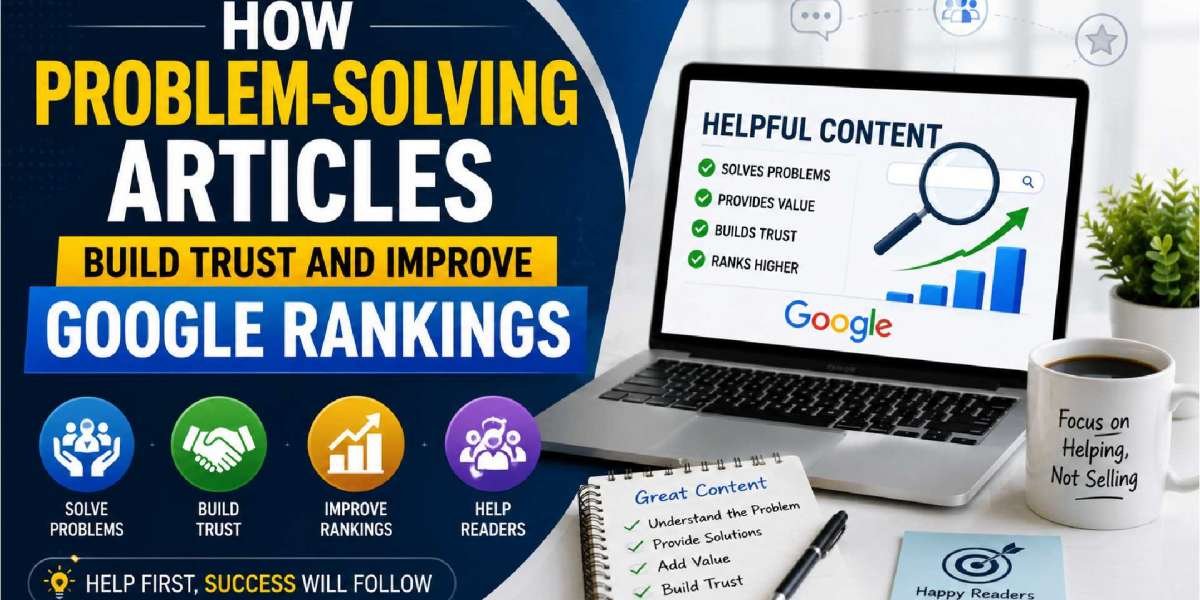

Millions of blog posts are published every day, but only a small number of them successfully rank on Google and attract consistent traffic. Many website owners spend hours writing content, adding keywords, and promoting their services, yet their articles still fail to perform well in search results.
The reason is simple: most content focuses too much on selling and not enough on helping.
Today, Google is smarter than ever. It no longer ranks articles only because they contain keywords. Google now pays close attention to user experience, helpfulness, and content quality. Websites that genuinely help readers solve problems are more likely to gain better rankings, more trust, and long-term traffic.
If you want your website to grow naturally, your content strategy must change from “selling products” to “solving problems.”
Google Wants Helpful Content, Not Just Marketing
Google’s main goal is to provide the best possible answers to users. Whenever someone searches on Google, they are usually looking for a solution, information, guidance, or help.
For example:
- Someone may want to fix a website issue.
- Someone may be searching for SEO tips.
- Someone may need help choosing a product or service.
- Someone may want to learn a new skill.
Google prefers websites that provide clear, useful, and trustworthy answers to these problems.
Many bloggers make the mistake of writing articles that only promote their business. Their content looks more like advertisements than useful information. Readers quickly lose interest because they feel the article is only trying to sell something.
Helpful content creates a better user experience. When visitors find real value in your article, they stay longer, read more pages, and trust your website. These positive signals help improve your SEO and Google rankings over time.
People Search Google Because They Have Problems
Every Google search begins with a question, need, or problem.
People do not usually search Google to see advertisements. They search because they want solutions.
This is why understanding your audience is extremely important. Before writing any article, ask yourself:
- What problem is my audience facing?
- What information are they searching for?
- What solution can I provide?
- How can my experience help them?
When you understand the reader’s intention, your content becomes more valuable and human-focused.
Good content speaks directly to the reader. It feels natural, helpful, and easy to understand. Instead of trying to impress people with complicated language, focus on giving clear and practical guidance.
Write for humans first, and search engines second.
Problem-Solving Articles Build Trust Naturally
Trust is one of the most important factors in online business and digital marketing.
People only buy products or services from websites they trust.
When your articles consistently help readers solve problems, visitors begin to see your website as reliable and professional. They start believing that you understand their needs and can provide useful solutions.
For example, imagine someone reads your blog article and successfully solves a problem using your advice. The next time they need additional help, they are more likely to return to your website because trust has already been established.
This is how helpful content works:
- First, you help the reader.
- Then, you build trust.
- After trust is built, business opportunities naturally follow.
Trust is far more powerful than aggressive advertising.
Stop Selling Immediately — Start Helping First
One of the biggest mistakes bloggers make is trying to sell too early.
When visitors open an article and immediately see too much promotion, they often leave the page quickly. Readers do not want to feel pressured into buying something.
Instead of directly saying:
“Buy our service now.”
Try focusing on:
- explaining the problem,
- discussing possible solutions,
- educating the reader,
- and providing genuine value.
Soft promotion works much better than hard selling.
For example, if you offer SEO services, do not write an article that only says your company is the best. Instead, write a detailed guide explaining common SEO mistakes and how businesses can fix them. While explaining the solutions, you can naturally mention how your service may help.
This approach feels more honest and professional.
Educating people before selling builds stronger relationships and creates long-term customers.
How to Write Articles That Actually Help Readers
Creating helpful content requires planning and understanding.
Identify Common Problems in Your Industry
Start by researching the questions people ask most frequently. Visit forums, social media groups, comments sections, and search suggestions to discover common problems.
Your article should answer real questions people already have.
Give Clear and Practical Solutions
Avoid unnecessary fluff. Readers appreciate simple explanations and actionable advice they can apply immediately.
Make your solutions:
- practical,
- realistic,
- and easy to follow.
Use Easy and Natural English
Simple writing is more effective than complicated writing.
Your goal is communication, not showing off vocabulary skills. Easy English improves readability and helps more people understand your content.
Add Real Examples
Examples make content more relatable and trustworthy. Real-life situations help readers understand concepts more clearly.
Focus on Reader Benefit
Always ask yourself:
“What benefit will the reader get after reading this article?”
If the answer is clear, your content is already moving in the right direction.
Connect Your Product or Service Naturally
Promoting your product is not wrong. The problem begins when promotion becomes the only purpose of the article.
The best approach is natural integration.
First:
- discuss the problem,
- explain the challenges,
- provide useful solutions,
- and educate the reader.
Then, if relevant, mention how your product or service can help solve the issue more effectively.
For example:
If you provide website SEO services, your article can teach readers about technical SEO problems, loading speed, keyword optimization, and backlinks. After giving valuable information, you can mention that professional SEO services can help businesses implement these strategies properly.
This method feels helpful instead of overly promotional.
Why Helpful Content Improves Google Rankings
Helpful content benefits SEO in many ways.
Longer User Engagement
When readers find your article useful, they spend more time on your website. Longer engagement signals tell Google that your content provides value.
Better User Experience
Google wants users to have a positive experience. Helpful, organized, and readable content improves overall satisfaction.
More Shares and Backlinks
Useful articles are more likely to be shared on social media, forums, and other websites. High-quality backlinks improve domain authority and search visibility.
Increased Trust and Authority
When your website consistently publishes valuable content, Google begins recognizing your site as a trusted source within your niche.
SEO success is not built overnight. Helpful content creates long-term growth that becomes stronger over time.
The Long-Term Benefits of Problem-Solving Content
Helpful content does more than improve rankings.
It helps you:
- build a loyal audience,
- increase organic traffic,
- improve brand reputation,
- generate qualified leads,
- and create long-term business growth.
Readers remember websites that genuinely help them.
Over time, your website becomes more than just a business website — it becomes a trusted resource.
That trust creates powerful marketing naturally.
Common Mistakes Bloggers Should Avoid
Writing Only for Keywords
Keywords are important, but overusing them makes content unnatural and difficult to read.
Copying Content
Duplicate or copied content damages trust and SEO performance. Always create original content with your own insights and explanations.
Too Much Self-Promotion
Readers lose interest when every paragraph sounds like an advertisement.
Ignoring User Intent
If your article does not answer the reader’s actual question, it will struggle to perform well.
Focus on solving problems, not only attracting clicks.
Simple Tips to Make Your Content More Humanized
- Write like you are talking to a real person.
- Use friendly and conversational language.
- Keep sentences clear and easy to understand.
- Avoid robotic or overly formal writing.
- Show empathy toward reader problems.
- Share useful advice honestly.
- Focus on helping first.
Humanized content creates emotional connection, trust, and better engagement.
Conclusion
The future of SEO is not just about keywords, backlinks, or technical optimization. It is about helping people.
Google wants content that provides value, answers questions, and improves user experience. Readers also prefer websites that genuinely care about solving problems instead of only making sales.
If you want better Google rankings, stronger trust, and long-term growth, start creating content that truly helps your audience.
Do not focus only on promoting your products or services.
Focus on solving problems first.
Because when people benefit from your content, trust grows naturally — and when trust grows, your business grows with it.