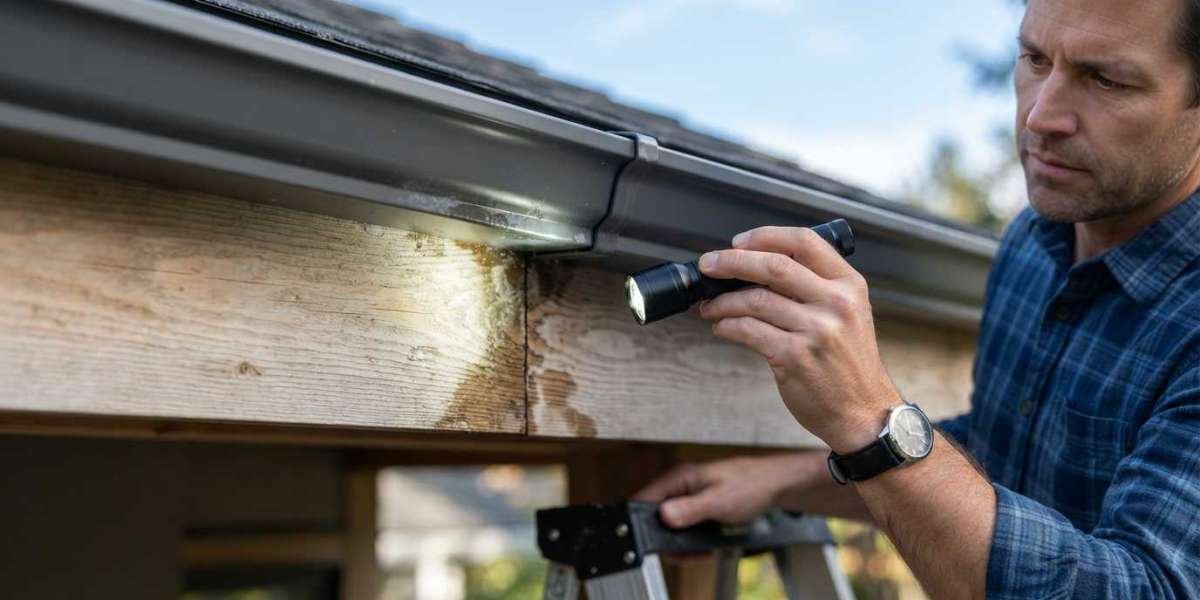

Gutter leaks may look like a small home repair problem, but even a slow drip can send water where it should not go. Water running behind the gutter can reach the fascia, soffit, siding, roof edge, or foundation. That is why finding gutter leaks early is often much easier and less costly than waiting until visible damage appears.
The good news is that most leaking gutters give warning signs before the problem becomes serious. A careful inspection during or shortly after rainfall can help homeowners spot trouble and decide whether simple maintenance, gutter repair, or full replacement is needed.
Common Signs of Gutter Leaks
You do not always need to see a hole to know that a gutter is leaking. Look for changes in how rainwater moves around your home.
Water Dripping From the Gutter
Water dripping from the bottom or back of a gutter during rain is one of the clearest signs of a leak. Pay close attention to areas where two gutter sections meet, because seams and joints are common trouble spots.
Stains or Damp Areas
Dark marks on siding, fascia, or areas below the roof edge may indicate that water is escaping from the gutter system. These marks are especially worth checking after several rainy days.
Where Gutter Leaks Usually Start
Some areas deserve more attention than others.
Gutter seams: Joined sections can develop gaps as materials age or move.
Gutter joints and corners: Corners handle a lot of water and can become weak points.
Downspout connections: Water can escape where the gutter meets the downspout if the connection is loose or damaged.
Loose gutter sections: A gutter that pulls away from the roofline may allow water to run behind it.
Rust, cracks, or holes: Older gutters can develop damaged areas that slowly release water.
How to Check for Gutter Leaks
A simple inspection can help you find a problem before it causes major damage.
1. Check the gutters after rain
Walk around the property and look at how water is moving. Healthy gutters should carry water toward the downspouts rather than spilling over the sides.
2. Look at seams and corners
Inspect every visible connection for dripping, gaps, or signs of old water marks.
3. Check the fascia
Look behind the gutter where possible. Soft, stained, or damaged wood can indicate that water has been getting behind the gutter.
4. Inspect the downspouts
Make sure water is leaving the downspout properly and moving away from the house. A blocked downspout can cause water to back up into the gutter.
5. Look for ground-level warning signs
Pooling water near the foundation can be a sign that the gutter system is not moving rainwater far enough away from the home.
What Happens When Gutter Leaks Are Ignored?
A leaking gutter does more than make a mess. Repeated water exposure can damage the parts of the home around the roofline.
Water may affect the fascia and soffit, stain siding, or reach areas around the roof edge. If water repeatedly lands beside the foundation, it can also contribute to moisture problems around the home.
The important point is that damage does not always happen immediately. A small leak that seems harmless today can become a recurring source of moisture every time it rains.
Common Causes of Gutter Leaks
Several everyday problems can lead to leaking gutters.
- Leaves and debris blocking normal water flow
- Cracked or damaged gutter sections
- Open or failing seams
- Loose gutter hangers
- Gutters pulling away from the fascia
- Damaged corners or end caps
- Blocked or poorly connected downspouts
- Older gutters that have weakened over time
Regular gutter maintenance helps catch these issues while they are still manageable.
Simple Ways to Prevent Gutter Leaks
Homeowners can reduce the chance of leaks with a few basic habits.
Keep gutters clear. Remove leaves and debris so rainwater can move freely.
Check the system regularly. Look for loose sections, cracks, gaps, and stains.
Watch the downspouts. Make sure water flows through them instead of backing up.
Inspect after severe weather. Heavy rain, wind, and snow can loosen or damage gutter sections.
Do not ignore repeated leaks. If the same area keeps leaking after cleaning or minor repair, there may be a larger problem with the gutter itself.
When Professional Gutter Repair Is Needed
DIY cleaning is reasonable when the work can be done safely, but gutter problems are not always simple. If gutters are high, badly damaged, pulling away from the house, or allowing water behind the roofline, a professional inspection is a better choice.
An experienced gutter professional can check the full system rather than only the spot where water is visible. This matters because water can travel from one part of the gutter before appearing somewhere else.
Professional repair may be enough when the damage is limited. However, if several sections are cracked, badly worn, or repeatedly failing, replacement may make more sense than continuing to repair the same problems.
Repair or Replace: Which Is Better?
A small leak at a sound gutter seam may only need repair. A damaged section may also be replaced without changing the entire system.
Replacement becomes more worth considering when gutters have widespread damage, repeated leaks, significant separation from the roofline, or signs of long-term wear. The right choice depends on the condition of the whole gutter system, not just one leaking spot.
For property owners who need help with larger gutter projects, Eavestrough Co's commercial gutter services can be a natural starting point for discussing the condition and needs of the property.
Prevent Gutter Leaks Before They Become a Bigger Problem
The best time to find a gutter leak is before water damage makes the problem obvious. Check the gutters after heavy rain, keep them free of debris, watch the seams and downspouts, and take repeated leaks seriously.
A gutter system has one basic job: move rainwater away from the home. When it stops doing that, finding the cause early can help protect the roof edge, walls, and foundation from unnecessary water exposure.
Frequently Asked Questions
How do I know if my gutters are leaking?
Look for dripping seams, water running behind the gutter, stains, loose sections, or water pooling where it should not.
What causes gutters to leak?
Common causes include clogged gutters, damaged seams, cracks, loose sections, damaged corners, and blocked downspouts.
Can a small gutter leak cause serious damage?
Yes. Repeated water exposure can damage the fascia, soffit, siding, roof edge, and areas around the foundation.
How often should gutters be inspected?
Gutters should be checked regularly and after major storms, especially if the property has trees nearby or the system is older.
Can gutter leaks be repaired?
Many small leaks can be repaired, but badly worn or repeatedly failing gutters may be better candidates for replacement.
When should gutters be replaced?
Consider replacement when gutters have widespread cracks, repeated leaks, major separation, or significant wear that makes ongoing repairs impractical.